Case 2506 · Public preview
One Head-in-Pillow Joint Can Be Causal Even When a Board Contains Several Other Defects
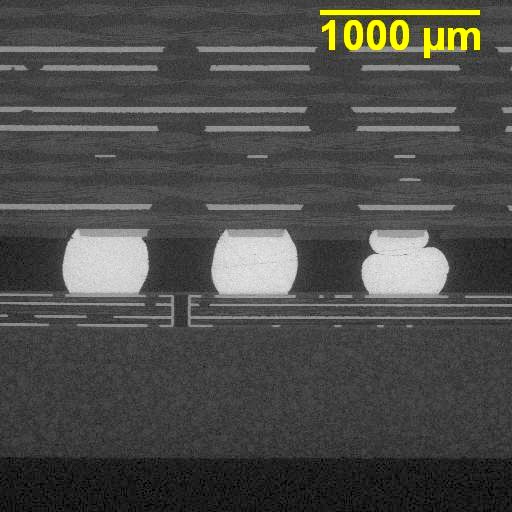
A circuit-board assembly failed while examination of several BGA devices revealed multiple solder-joint and board-interface anomalies.
Edge-on inspectionMetallographic microsectioningSEMPry testingSolder-joint height comparison
What the evidence preview establishes
A head-in-pillow separation at one electrically suspect BGA ball was the most likely cause of the board failure. Voiding, warpage-related pad cratering, and solder-mask encroachment were significant additional defects, but they represented different mechanisms at other locations.
Why this case matters
Do not let a board with many anomalies become a single undifferentiated root-cause list. Correlate each defect with its location, morphology, and circuit significance; a head-in-pillow open, warpage-driven pad crater, interfacial void, and mask-induced nonwetting joint require different corrective actions.
Full evidence reserved for MEMBER and STOREThe complete case includes the evidence sequence, 4 interpreted figures, alternative explanations, limitations, and practical application guidance.