Case 1849 · Public preview
Corrosive Residue Can Convert a Capacitor Termination into a Nonwetting Surface
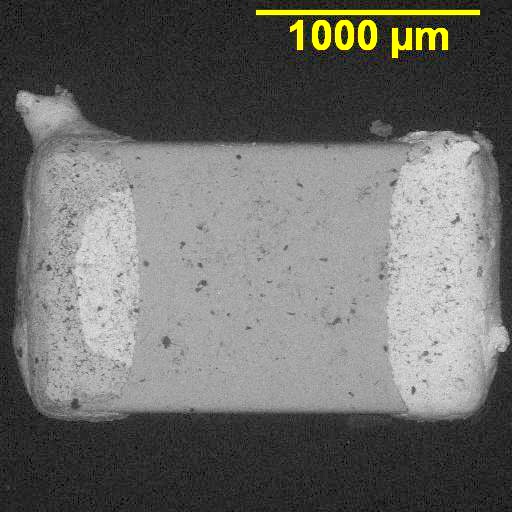
A capacitor exhibited an electrically open or poorly connected termination after soldering.
Electrical testingSEMEDSMicrosectioningElemental analysisMetallization review
What the evidence preview establishes
Potassium-rich corrosive contamination attacked the termination solder and exposed oxidized nickel-tin intermetallic that would not wet. Porous copper-nickel metallization and a discontinuous nickel barrier enabled penetration and retention of contamination.
Why this case matters
For isolated nonwetting, examine beneath the visible finish. Porous termination metallurgy can turn external residue into a penetrating corrosion mechanism.
Full evidence reserved for MEMBER and STOREThe complete case includes the evidence sequence, four interpreted figures, alternative explanations, limitations, and practical application guidance.