Case 1836 · Public preview
Thermal Damage Can Create the Electrolyte for Connector Migration
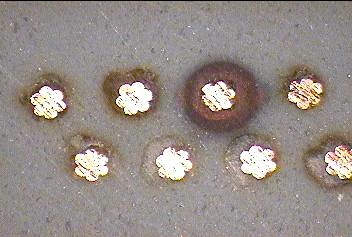
A connector measured approximately 2.6 kilohms between adjacent pins under a 24-volt bias condition.
Optical microscopyMicrosectioningSEMEDSElemental mappingInsulation-resistance localization
What the evidence preview establishes
Localized overheating around one pin damaged chlorinated potting material and created a corrosive ionic environment. With voltage applied, copper, nickel, and gold species migrated from the damaged pin toward the adjacent pin, producing the leakage path.
Why this case matters
When leakage develops near a thermally damaged connector pin, examine the surrounding polymer as part of the electrical system. Heat can release ionic species that transform potting material into a migration-supporting environment.
Full evidence reserved for MEMBER and STOREThe complete case includes the evidence sequence, four interpreted figures, alternative explanations, limitations, and practical application guidance.