Case 287 · Public preview
Package Gaps Can Admit Contamination and Support Internal Dendrite Growth
Two molded diodes developed electrical leakage, including one persistent resistive short and one failure that disappeared after removal from its assembly.
Electrical testingSEMEDSSequential microsectioningFailed-control comparison
What the evidence preview establishes
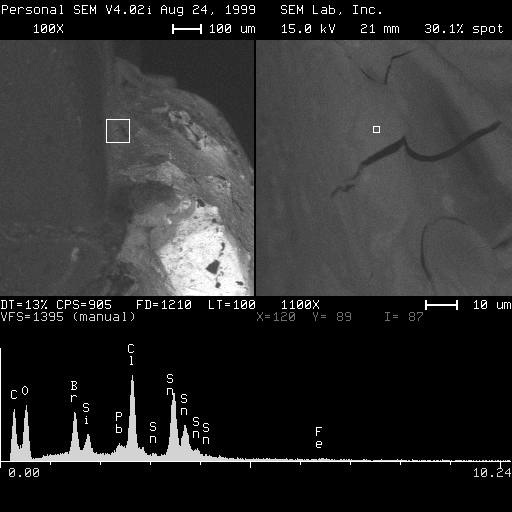
Moisture and ionic contamination could enter through capillary gaps at the lead-to-body interface and reach molding defects beside the die. Copper dendritic growth along that internal interface provided a conductive path between the diode terminals.
Why this case matters
A molded package is not necessarily sealed against ionic contamination. Examine external residue, lead-to-body capillaries, internal molding interfaces, and metallic growth together when diagnosing leakage that changes after handling or removal.
Full evidence reserved for MEMBER and STOREThe complete case includes the evidence sequence, four interpreted figures, alternative explanations, limitations, and practical application guidance.