Case 2466 · Public preview
Trapped Tin-Lead Debris Can Short Laser-Trimmed MELF Resistor Tracks
MELF resistors shifted both below and above resistance tolerance, with some values changing after additional heating.
Electrical testingOptical microscopySEMEDSMicrosectioningDimensional measurement
What the evidence preview establishes
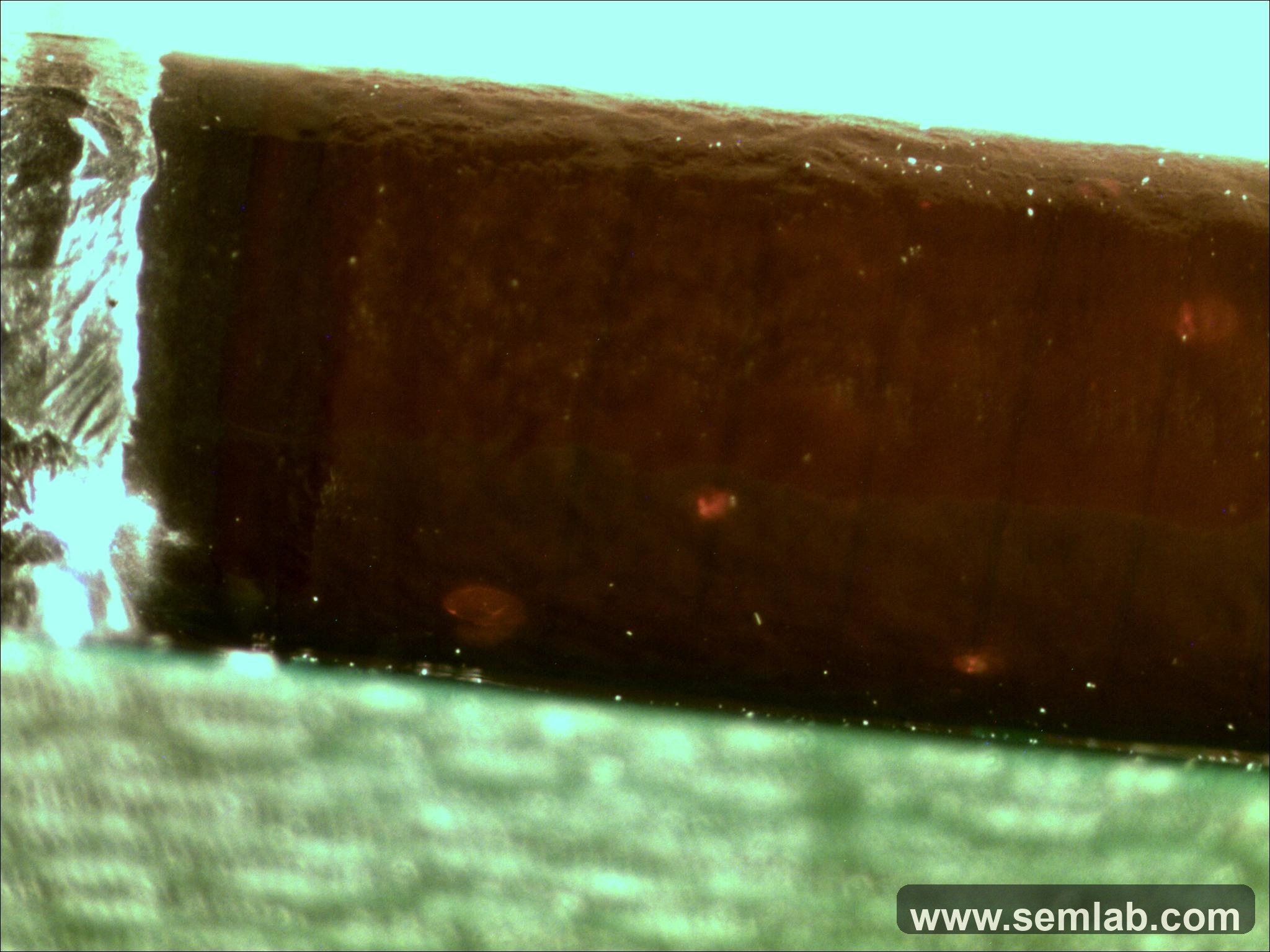
Tin-lead particles trapped beneath the outer coating bridged adjacent laser-trimmed resistor tracks and caused low-resistance failures. Narrower-than-required laser cuts increased bridging susceptibility, while thermal shock from a temporary particle short plausibly fractured resistor material and produced high-resistance cases.
Why this case matters
A coated resistor can contain mobile conductive debris invisible from its exterior. Sectioning through laser trims, confirming particle chemistry, and measuring trim geometry are essential when resistance shifts with heating.
Full evidence reserved for MEMBER and STOREThe complete case includes the evidence sequence, four interpreted figures, alternative explanations, limitations, and practical application guidance.