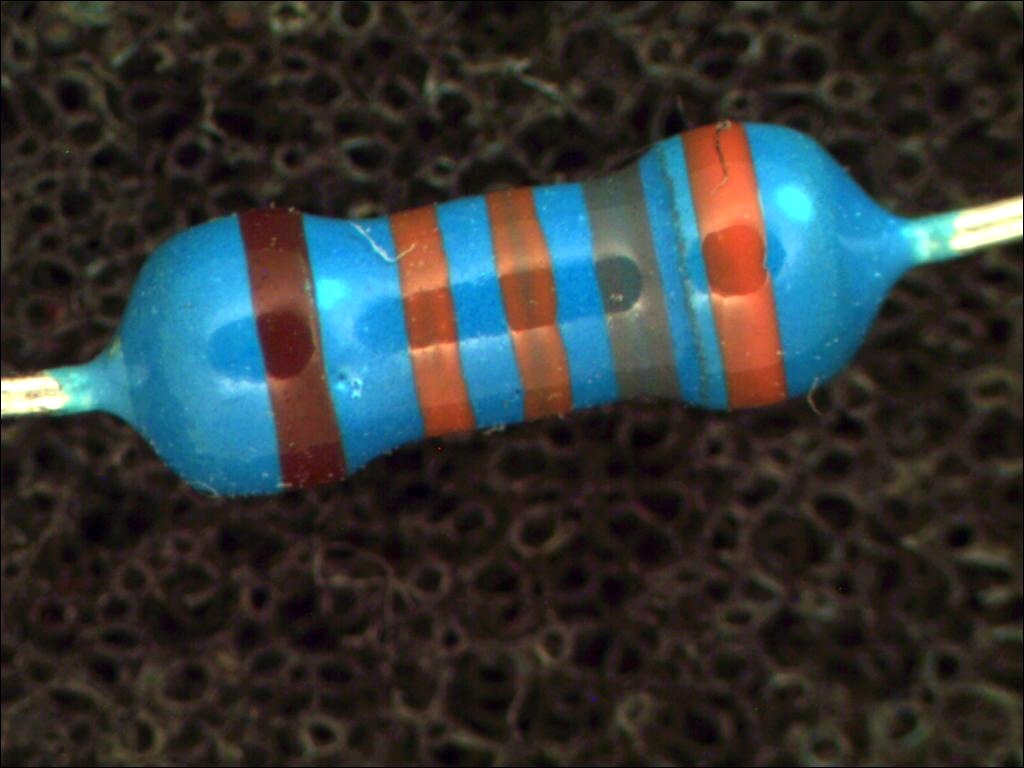
Case 2089 · Public preview
Coating Voids and Poor Adhesion Can Open a Thin-Film Resistor
A metal-film resistor measured greater than 300 megohms and was electrically open.
Optical microscopyResistance measurementSEMEDSMicrosectioningInterface examination
What the evidence preview establishes
Corrosion of the extremely thin nickel-chromium resistor layer was the most likely failure mechanism. An open coating void, chlorine and sulfur contamination, and poor coating adhesion provided routes for contaminants and moisture to reach the functional film.
Why this case matters
An open thin-film resistor may fail through a path too small to image directly. Correlate coating defects, interface adhesion, and contaminant chemistry to determine whether the protective system allowed corrosion of the functional layer.
Full evidence reserved for MEMBER and STOREThe complete case includes the evidence sequence, four interpreted figures, alternative explanations, limitations, and practical application guidance.