Case 467 · Public preview
Copper Oxidation and Silicone Contamination Can Defeat OSP Solderability
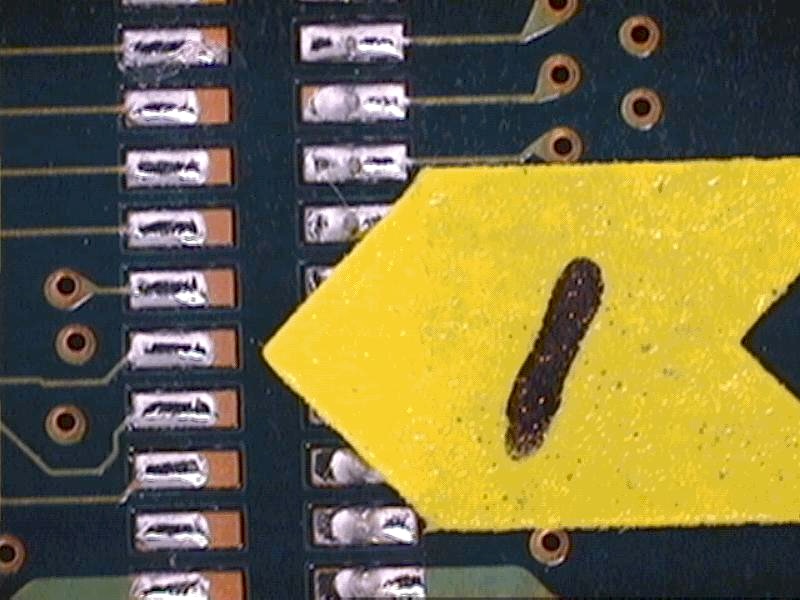
Several copper pads failed to wet completely, including locations that resisted repeated cleaning and hand-soldering attempts.
Optical microscopySEMEDSSurface examinationSite-to-site comparisonProcess-sequence review
What the evidence preview establishes
The nonwetting was most consistent with a combined mechanism: copper oxidation during first-side reflow reduced the solderability of pads intended for second-side assembly, while silicone and halide contamination further obstructed wetting and accelerated surface degradation.
Why this case matters
OSP protects copper only within a controlled thermal and handling window. When one board side is exposed to reflow before the other is soldered, protect the remaining pads from oxidation and silicone-bearing handling contamination.
Full evidence reserved for MEMBER and STOREThe complete case includes the evidence sequence, four interpreted figures, alternative explanations, limitations, and practical application guidance.