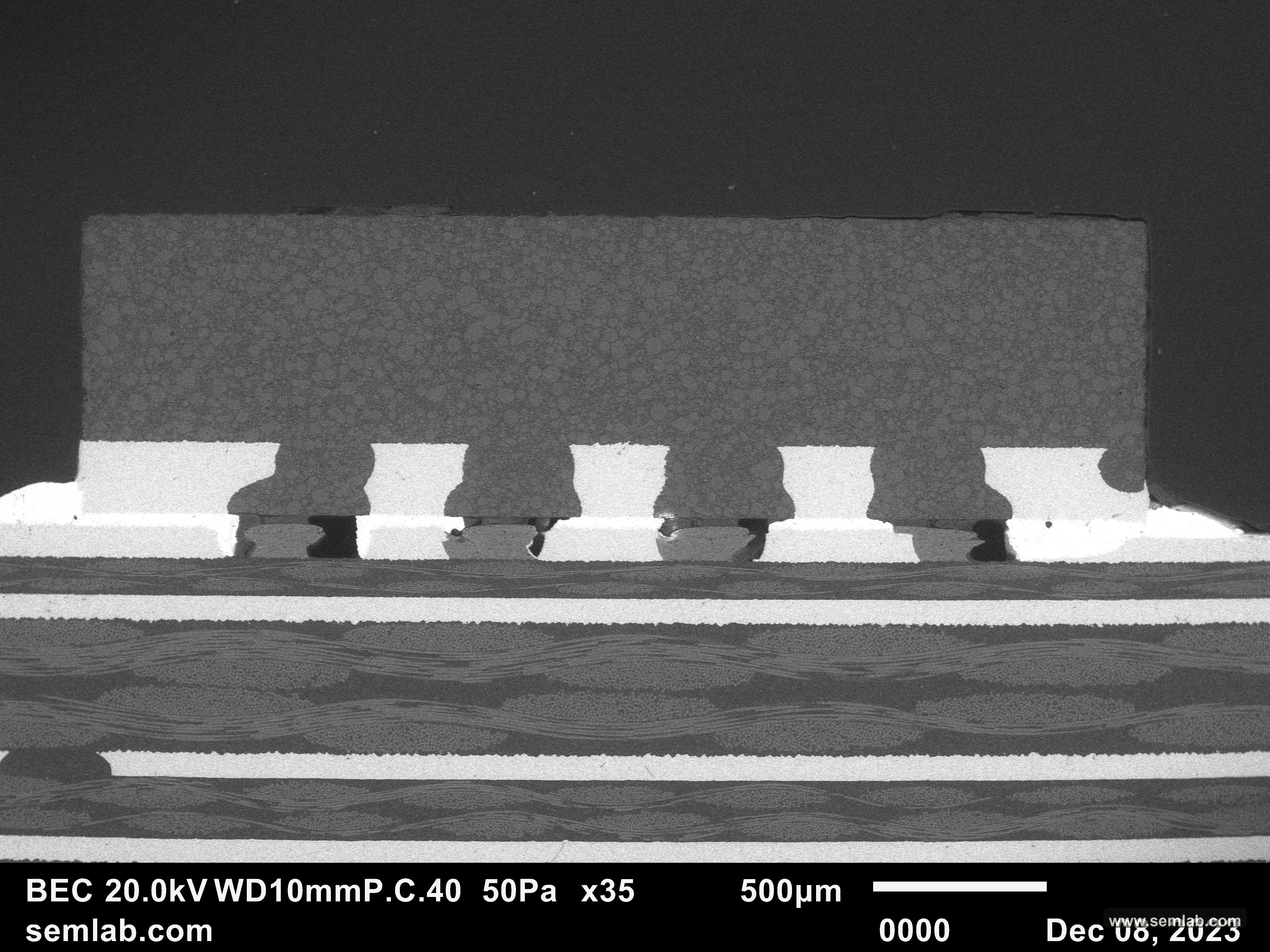
Not Suspect
QFN Joints That Look Acceptable
A clear caution image because the visible solder-joint structure is largely acceptable, which forces the interpretation to move beyond “it must be a solder-joint defect.”
Interpretation
Why this image matters
This image is valuable because it teaches restraint. The solder-joint structure is largely acceptable, so the investigation cannot simply stop at the cross-section.
The report concluded that the joints had acceptable voiding, no fractures, and a fully developed intermetallic layer, while broader evidence suggested silicone contamination may still have contributed to the failures.
In the library, this works as a `not suspect` example for engineers who need to remember that a clean-looking joint image does not automatically close the failure question.
interpretation-caution
qfn
acceptable-voiding
silicone-contamination
Use this when
Best comparison value
- Reference: acceptable-looking joints in a real failure investigation
- Explaining why contamination or process history may matter more than obvious fracture
- Comparing visually acceptable joints to true joint-failure images
Related content